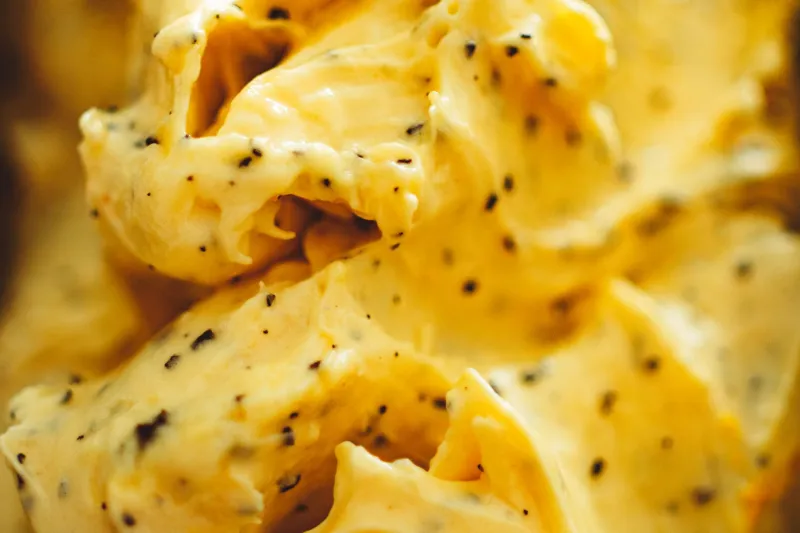
Why That Childhood Ice Cream Sandwich Tasted Better Then (And What Your Brain Is Hiding From You)
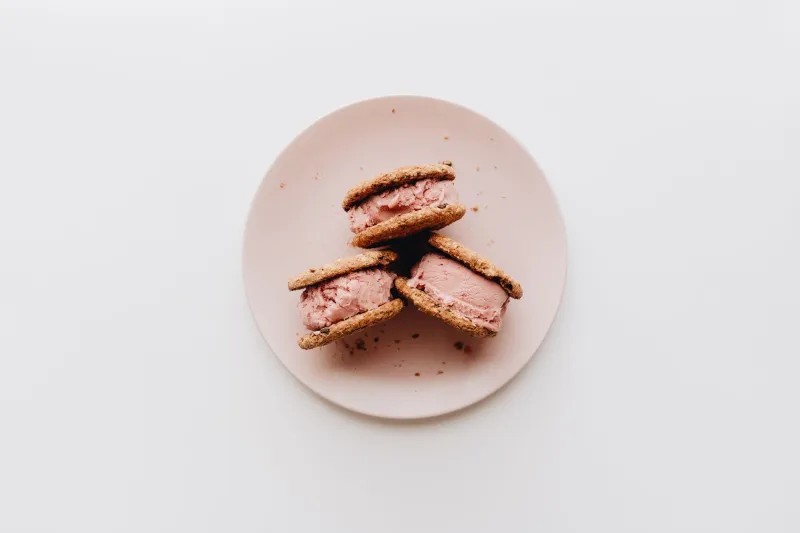
There's a specific kind of heartbreak that only dessert lovers know. You're standing in the freezer aisle, flooded with memories of that one ice cream sandwich — the one your grandma kept in the back of her freezer behind the peas, the one that tasted like summer had a flavor. You grab it. You unwrap it with ceremony. You take a bite.
And then... huh.
It's fine. It's perfectly fine. But it's not that. The cookie part seems stiffer. The ice cream feels less pillowy. The whole experience, once a religious event, now registers somewhere between "decent" and "I drove to the store for this?"
Welcome to the Squish Ceiling — the invisible threshold beyond which a beloved dessert simply cannot get any softer in your memory, no matter how many times real life tries to correct you.
Your Brain Is a Dessert Liar (A Loving One, But Still)
Dr. Linda Forsberg, a sensory psychologist who consults with food brands on consumer nostalgia (yes, that's a real and wonderful job), explains the phenomenon with clinical precision and zero sympathy for our feelings.
"Memory doesn't store experiences like a photograph," she says. "It stores them like a highlight reel edited by someone who really wants you to feel good about your past. Every time you recall eating that soft-serve twist cone at the county fair, the memory gets slightly embellished. Softer. Creamier. More golden-hour-lit."
This process — called memory reconsolidation — means that every time you revisit a memory, you're not just replaying it. You're rewriting it, just a little. And because dessert experiences are so tied to emotion (joy, safety, summer freedom, grandma's kitchen), those memories get the most aggressive editorial treatment of all.
By the time you're 35 and buying that ice cream sandwich, you're not competing with the actual dessert from 1994. You're competing with a two-decade-long mythology.
The ice cream sandwich never had a chance.
But Wait — Has the Actual Recipe Changed?
Here's where it gets genuinely conspiratorial, and we say that with the enthusiasm of people who once spent four hours reading ingredient label archives online.
Food reformulation is extremely real and happens constantly. Brands quietly adjust recipes to cut costs, respond to ingredient shortages, meet new labeling regulations, or chase cleaner ingredient lists. Stabilizers change. Sweetener ratios shift. Fat content gets nudged. The softness you remember might not just be a memory trick — the product itself may have literally changed.
"We've seen it with everything from snack cakes to ice cream bars," says food scientist Marcus Delray, who has spent the better part of his career studying texture in frozen desserts. "Manufacturers swap out emulsifiers, change the overrun percentage in ice cream, or reformulate the cookie component of a sandwich. Each change is small. But stacked over twenty years? The product you're eating today may be meaningfully different from the one you ate as a kid."
Overrun, for the uninitiated, is the amount of air whipped into ice cream during production. Higher overrun means a lighter, fluffier, more pillowy texture. Lower overrun means denser, icier, less dreamy. If a brand quietly dials that number down to save money, you'll feel it — even if you can't name exactly what changed.
So yes. Sometimes it's your brain. And sometimes, the ice cream sandwich actually got worse. Both things can be true simultaneously, which is honestly very on-brand for adulthood.
The Taste Bud Plot Twist
There's a third culprit nobody likes to talk about: you.
Not you specifically. Just... human biology, doing its thing. Children have significantly more taste buds than adults — somewhere in the range of 10,000 taste buds at peak kid-hood, gradually declining as we age. Kids also experience sweetness more intensely, which is why a child can eat a Pixy Stix with genuine joy while an adult finds it aggressively unpleasant.
Beyond raw receptor count, children haven't built up the flavor tolerance that adults develop after decades of eating. That first bite of soft-serve was neurologically explosive for your eight-year-old self. Your adult palate, seasoned by years of complex meals, craft cocktails, and very strong opinions about cheese, processes that same soft-serve with considerably more restraint.
"Kids are basically experiencing dessert in high definition," says Delray. "Adults are watching the same movie, but on a slightly older TV."
This doesn't mean your dessert experience is worse now — it's just different. Adults develop appreciation for subtlety, complexity, and texture nuance that kids completely miss. You might not feel that Creamsicle as explosively as you once did, but you can now notice things like the quality of the orange flavoring or the way the vanilla center melts differently at room temperature. Growth! Probably.
The Nostalgia Trap (And How to Escape It, If You Want To)
Here's the uncomfortable truth that Squishy Cream is legally obligated to deliver: chasing the exact childhood dessert experience is a fool's errand, and we say that with tremendous love.
You cannot recreate the sensory context of being eight years old on a July afternoon with no responsibilities and a popsicle melting down your arm. That context — the emotional richness, the freedom, the low-stakes joy — is doing most of the heavy lifting in those memories. The dessert is almost beside the point.
But that doesn't mean nostalgia is useless. Food memories are powerful connective tissue, linking us to people, places, and versions of ourselves we'd otherwise lose track of. When you bite into that ice cream sandwich and feel a flicker of something warm and familiar, that's not a lie your brain is telling you. That's your nervous system doing something genuinely beautiful.
The trick, according to Forsberg, is to stop expecting the dessert to time-travel you back to 1994. "Approach nostalgic foods with curiosity instead of expectation," she suggests. "Ask what you like about it now. You might surprise yourself."
Build New Memories (We Volunteer as Tribute)
The real move — and we cannot stress this enough — is to start building new dessert memories right now, today, with the intensity and attention they deserve. Find a local soft-serve spot and go on a Tuesday afternoon for no reason. Share a ridiculous ice cream sundae with someone you like. Eat the fancy pint slowly, with a good spoon, without your phone.
Give future-you something worth misremembering.
Because in twenty years, you're going to be standing in some futuristic freezer aisle staring at a holographic ice cream sandwich, absolutely convinced it tasted better back in 2025.
And you know what? In your memory, it will have.
That's the Squish Ceiling. And honestly? It's kind of the whole point.