How Soft Is Too Soft? Food Scientists Reveal the Hidden Limits of Dessert Squishiness
There is a moment — you've experienced it, we've all experienced it — when a dessert becomes too soft. Not in a "this is uncomfortably indulgent" way, but in a "this is no longer a food item, it is now a puddle with ambitions" way. The line between transcendent squish and total structural collapse is thinner than a crepe, and the science behind it is surprisingly wild.
At Squishy Cream, we take softness seriously. Borderline professionally. So we went deep — like, really deep — into the chemistry and engineering that determines exactly how soft a dessert can get before it stops being a dessert and starts being a liability.
The Squish Ceiling Is Real, and It Has a Name
Food scientists actually have a term for the point at which a soft food loses its functional integrity: the gel-sol transition threshold. It sounds like something from a chemistry final exam, but the concept is delightfully simple. Every soft dessert — your panna cottas, your molten lava cakes, your perfectly jiggly mochi — exists in a careful balance between gel (solid-ish) and sol (liquid-ish) states.
"Think of it like a tightrope," says Dr. Priya Mehta, a food texture researcher at a Midwest food science institute who has spent years studying what she calls 'tactile indulgence.' "The best soft desserts are always walking that rope. The moment the ratio tips too far toward the liquid side, you don't have a dessert anymore. You have a sauce that's confused about its identity."
That confusion, it turns out, is engineered more carefully than most people realize.
The Ingredients Holding Everything Together (Barely)
So what keeps a perfectly soft dessert from becoming a formless blob? A small army of structural heroes, most of which you've probably never thought about while shoveling a spoonful of pudding into your mouth.
Gelatin and agar are the obvious ones — the scaffolding crew of the dessert world. But the real unsung heroes are hydrocolloids: substances like xanthan gum, carrageenan, and pectin that trap water molecules inside a gel network. They're the reason your panna cotta wobbles without weeping, and why a properly made mousse holds its cloud-like shape instead of deflating like a sad balloon.
Pastry chef and James Beard semifinalist Marco Delgado, who runs a dessert-forward restaurant in Chicago, puts it more colorfully: "Every soft dessert is basically a negotiation between water and structure. Water wants to go free. Your job as a pastry chef is to convince it to stay put — at least long enough for the dessert to make it to the table."
He pauses. "Sometimes you lose the negotiation. It happens."
Which Desserts Are Living Closest to the Edge?
Not all soft desserts are equally daring. Some are built with generous structural margins — your pound cakes, your cheesecakes, your classic soft-serve swirl. Others are essentially performing a high-wire act every single time they're made.
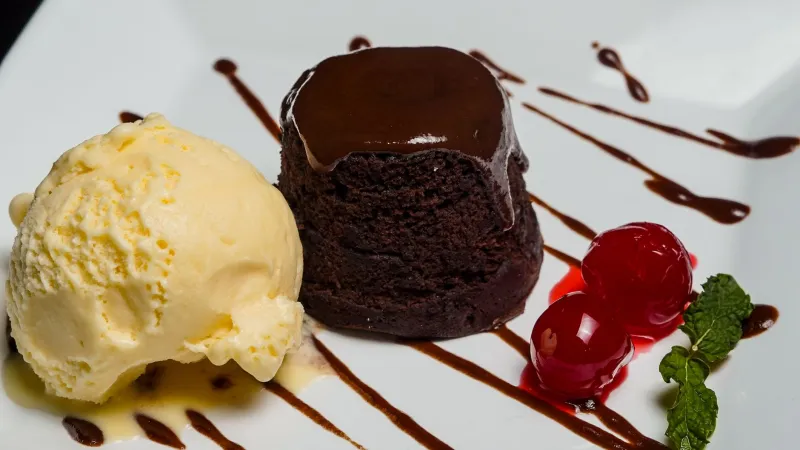
Molten lava cake is perhaps the most dramatic example. The entire appeal of the dish is a liquid chocolate center that hasn't quite set — which means it's intentionally hovering right at the gel-sol threshold. Overbake it by 90 seconds and you've made a brownie. Underbake it by the same margin and you've made a very expensive cup of hot chocolate with a cake hat.
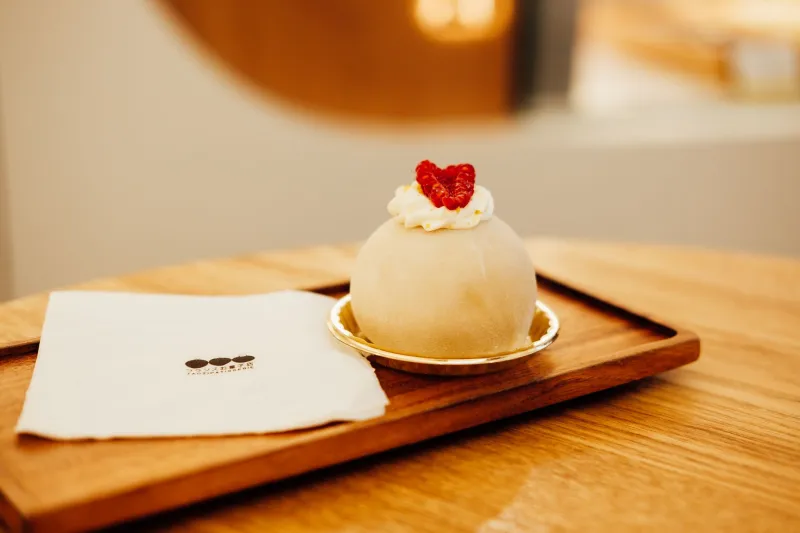
Mochi ice cream is another fascinating case. The rice flour dough (mochi) needs to be soft enough to bite through cleanly, but firm enough to hold a scoop of ice cream without turning into a sticky, collapsed disaster. The window of acceptable texture, according to Dr. Mehta, is remarkably narrow — a matter of degrees in temperature and hydration percentage.
Soft-serve ice cream might be the most engineered soft food in American dessert culture. The ideal soft-serve overrun (the amount of air whipped into the mix) hovers around 30 to 50 percent. Go lower and it's dense and icy. Push much higher and you're essentially eating flavored foam, which sounds fun until it is very much not fun.
When Desserts Go Too Far (And What Happens Next)
Pushing past the squish ceiling doesn't always end in disaster — sometimes it ends in innovation. Chef Delgado describes an early experiment with an ultra-soft olive oil cake that collapsed completely in testing. "It was a failure by every metric," he says cheerfully. "But the texture of the collapsed version was incredible — almost like a very dense, very rich pudding cake. We put it on the menu. People lost their minds over it."
This is actually a documented phenomenon in food science: controlled failure. Some of the most beloved soft desserts in American food culture were born from recipes that technically didn't hold up. Lava cake itself was reportedly the result of an undercooked chocolate cake that a chef decided to serve anyway. Sticky toffee pudding, a British import that's become a staple at American restaurants from Nashville to Portland, is essentially a cake that's been deliberately pushed to its moisture limits.
The squish ceiling, in other words, isn't always a wall. Sometimes it's a door.
Why the Limit Matters More Than You Think
Here's the thing that food scientists want dessert lovers to understand: the squish ceiling isn't just about structural integrity. It's about sensory experience. A dessert that's too soft loses what researchers call mouthfeel contrast — the subtle interplay between resistance and yield that makes eating a perfectly textured treat so satisfying.
"When something offers zero resistance, your brain doesn't register it as food in the same way," Dr. Mehta explains. "There's actual neurological research showing that a small amount of textural resistance — even in the softest foods — triggers pleasure responses that pure liquid just doesn't."
This is why the best soft desserts always have something going on: a slight crust on a molten cake, the gentle chew of mochi skin, the barely-there density of a well-made mousse. They're soft, yes — beautifully, gloriously soft — but they're not nothing. They push right up against the ceiling without going through it.
The Future of Soft: How Far Can We Go?
Food technologists are actively working to push softness boundaries further without sacrificing structure. New hydrocolloid blends, precision temperature control, and even ultrasonic processing (yes, sound waves applied to food) are opening up possibilities that would have seemed absurd a decade ago.
Delgado is cautiously optimistic. "The goal isn't maximum softness for its own sake. The goal is maximum pleasure. Those aren't always the same thing."
Somewhere between a perfectly jiggly panna cotta and a completely liquid puddle of ambition, the ideal dessert exists — engineered to sit right at the edge of what's structurally possible, soft enough to feel like a treat, firm enough to make it to your mouth.
That's the squish ceiling. And honestly? We're glad it's there. The view from the edge is spectacular.