Opposites Attract: The Weird Texture Combos That Are Breaking Dessert Rules in the Best Way
Somewhere out there, a pastry chef is cackling. They've just pulled a batch of something from the oven — something that, by all logic, should not work. A shell so crisp it shatters. A center so molten it practically exhales. Together? Pure, unhinged, beautiful chaos. And the dessert-eating public is absolutely losing its mind over it.
Welcome to the golden age of textural contrast, where the best bites aren't smooth and uniform — they're complicated, surprising, and occasionally structurally questionable. If your dessert doesn't make you pause mid-chew to ask "wait, what just happened?" are you even living?
The Science of the Double-Take Bite
Before we get into the good stuff, let's talk about why opposing textures feel so satisfying. Spoiler: your brain is a drama queen, and it loves a plot twist.
Food scientists call it "dynamic contrast" — the phenomenon where two or more drastically different textures in a single bite trigger a more intense sensory response than either texture alone. When you bite into something simultaneously crunchy and creamy, your brain registers two distinct signals at once, which amplifies the overall pleasure response. Basically, contrast is the dessert equivalent of a surprise party. Totally overwhelming, completely delightful.
Psychologist and food researcher Charles Spence at Oxford University has studied this extensively, noting that multi-textural foods engage more of our cognitive attention during eating — which translates to a more memorable, more satisfying experience. In other words, your brain is paying more attention when things get weird. And more attention means more enjoyment. Science said so. You're welcome.
The Molten Core: When Crispy Meets Lava
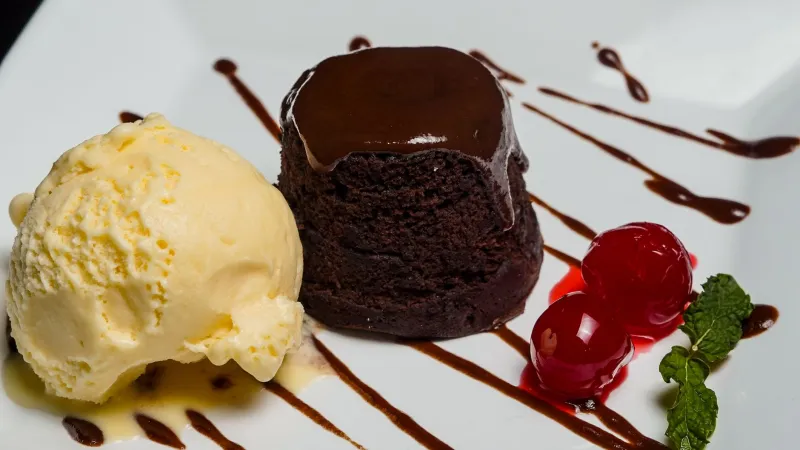
Few textural marriages are as dramatic — or as Instagram-famous — as the crispy-shell-meets-molten-center combo. Think of the lava cake: that unassuming chocolate dome that, when you cut into it, absolutely floods the plate with liquid ganache. The contrast between the slightly firm sponge exterior and the warm, flowing center is so satisfying it borders on theatrical.
Bakeries across the country have taken this concept and run wild with it. In Chicago, pastry shops are doing crispy churro shells stuffed with warm dulce de leche that oozes on the first bite. In New York, croissant hybrids with shatteringly laminated exteriors hide pockets of molten pistachio cream inside. Down in New Orleans, beignets are getting leveled up with liquid praline centers that pool into the powdered sugar like a sweet little lava flow.
The key to making this work? Temperature and timing. The exterior needs enough structure to hold its shape right up until the moment you bite in, while the interior needs to stay fluid. It's a tightrope walk — and when bakers nail it, the result is genuinely one of the most joyful eating experiences a human can have. Bold claim? Go eat a perfect lava cake and then come talk to us.
Chewy Meets Silky: The Cookie and Ganache Love Story
On the less volcanic but equally swoon-worthy end of the spectrum, we have the chewy-soft-meets-silky-smooth pairing. Specifically: chewy cookies and ganache. This is the textural duo that bakeries like Levain in New York and Insomnia Cookies have built entire empires around, and for good reason.
A thick, dense, slightly underbaked chocolate chip cookie — the kind with actual chew resistance — becomes something transcendent when paired with a silky dark chocolate ganache drizzle or a dip. The ganache coats the teeth while the cookie pushes back. It's a whole conversation happening in your mouth. A very delicious, very one-sided conversation where you're just nodding enthusiastically.
Home bakers have caught on too. Across Reddit's r/Baking and TikTok's dessert corners, the trend of dunking warm cookies into ganache or stuffing them with a ganache center has become a full-blown movement. Because some trends are trends for a reason.
The Ice Cream Angle: Crunchy Things Have No Business Being This Good
Now, since we're Squishy Cream and ice cream is basically our love language, we'd be remiss not to talk about the textural magic happening in the frozen dessert world.
The waffle cone is, at its core, a masterclass in contrast. Crispy, toasted, slightly caramelized cone meets cold, creamy, yielding ice cream. As you eat, the cone softens from the bottom up, creating an ever-changing textural experience in a single serving. By the last bite — that iconic ice cream-stuffed cone tip — you've got a soggy-soft shell and cold cream all in one, and it's somehow even better than the beginning.
Shops are now engineering this contrast intentionally. Rolled ice cream spots in cities like Houston and Los Angeles top their flat-rolled creations with feuilletine flakes — those impossibly thin, crispy wafer bits — specifically for the crunch-against-cream contrast. Soft-serve joints are pressing cookies into their swirls or dunking the whole thing in a hard chocolate shell that shatters on the first bite. Some places in LA are even doing tempura-fried ice cream, which is either the most unhinged textural experiment ever conceived or an absolute act of genius. (It's the second one.)
Pillowy Bread, Sharp Jam: An Old-School Combo With New Hype
Not all contrast has to be extreme. Sometimes the most satisfying textural pairings are the gentlest ones. Take the brioche doughnut trend that swept American bakeries over the past few years. The dough itself is pillowy, almost cloud-like — it barely resists when you squeeze it. But pipe in a tart raspberry or passion fruit jam, and suddenly you've got a fruity, slightly firm filling pushing back against all that softness. The contrast is subtle but deeply satisfying in a way that's hard to articulate and very easy to eat six of.
This is the same principle behind the beloved PB&J, by the way. Creamy peanut butter and slightly gelatinous jam on soft bread — textures that are similar but not identical, creating a gentle contrast that feels comforting rather than dramatic. Textural contrast doesn't always have to be a fireworks show. Sometimes it's just a really good Sunday morning.
Why Your Dessert Should Have a Personality Disorder (Texturally Speaking)
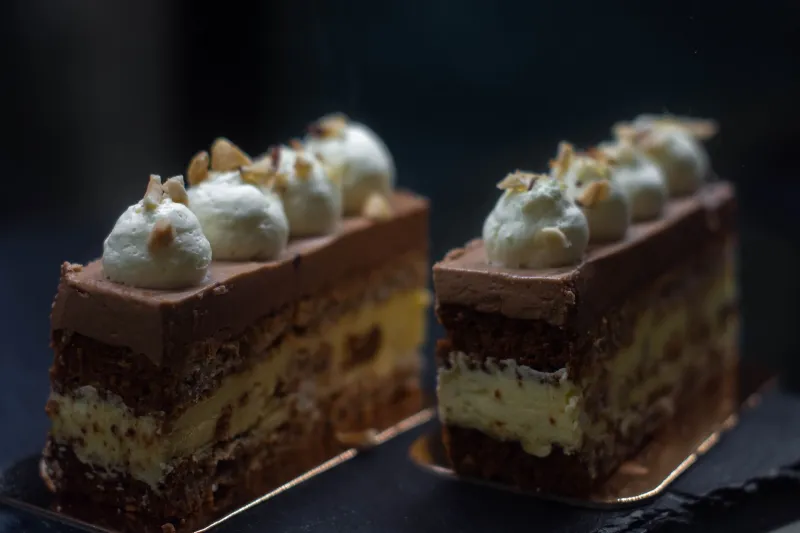
The throughline in all of these pairings is that the best desserts refuse to be just one thing. They're crunchy and gooey. Crispy and molten. Chewy and silky. They contain multitudes, and that's exactly what makes them unforgettable.
American dessert culture has always celebrated indulgence, but there's a growing sophistication in how we think about what makes a treat truly satisfying. Flavor still matters — obviously, always, forever. But texture is the secret architect of a truly great eating experience. It's the element that turns a good dessert into one you can't stop thinking about.
So next time you're baking at home or ordering at your favorite spot, think about the contrast. Is there something crunchy to offset the creamy? Something chewy to balance the silky? A little structural chaos to keep things interesting?
Your taste buds — and your brain's drama-loving sensory receptors — will thank you.