Poke, Press, and Taste: Rate Your Dessert on the Official Squishy Cream Squish Scale
Let's be honest. You've poked a brownie before eating it. You've pressed your thumb into a marshmallow just to watch it spring back. You've squeezed a mochi ball for no reason other than the sheer, deeply satisfying joy of it. Don't be embarrassed — we do it too. In fact, we've built an entire brand around it.
Welcome to the official Squishy Cream Squish Scale, your new favorite way to evaluate, argue about, and obsess over the textural greatness (or tragic failure) of any dessert that crosses your plate. Whether you're a home baker chasing the perfect pillowy cookie or a soft-serve fanatic trying to articulate why one swirl hits different than another, this guide is your golden ticket.
Grab your dessert. Wash your hands. Let's get scientific — but make it fun.
What Even Is "Squish" and Why Should You Care?
Texture is the unsung hero of the dessert world. Flavor gets all the glory — chocolate! vanilla! salted caramel! — but texture is what keeps you coming back for bite number two (and three, and four). A dessert that tastes amazing but feels like wet cardboard? Tragic. A dessert that looks humble but delivers that perfect give under your fork? Instant legend.
Squishy Cream defines "squish" as the full sensory experience of resistance, yield, and recovery in a dessert. It's how something pushes back when you press it, how it surrenders when you bite in, and whether it bounces back or stays dented. Every great dessert has a squish personality, and the Squish Scale helps you name it.
The Squishy Cream Squish Scale: Levels 1 Through 5
Print this out. Stick it on your fridge. Refer to it every single time you eat dessert. You're welcome.
Level 1 — The Brick No give. No mercy. Think stale biscotti left out for three days or a forgotten sugar cookie from last Christmas. These desserts fight back and win. Not necessarily bad (a good snap can be glorious), but squish? Zero. Rating: 1 out of 5 squishes.
Level 2 — The Firm Handshake There's a little resistance here, but it's not unpleasant. Think dense fudge, a well-set panna cotta, or a thick slice of New York cheesecake. It yields eventually, but it makes you earn it. Rating: 2 out of 5 squishes.
Level 3 — The Happy Medium Ah, the Goldilocks zone. A classic chocolate chip cookie fresh from the oven, a properly made rice crispy treat, or a scoop of premium ice cream that holds its shape but melts the second it hits your tongue. Not too firm, not too soft. Just right. Rating: 3 out of 5 squishes.
Level 4 — The Cloud Nine Now we're talking. Japanese milk bread, a perfectly proofed donut, whipped cream piled high on a sundae, or a mochi ice cream ball that squishes with the satisfying resistance of a stress toy made of dreams. This is where most Squishy Cream devotees live. Rating: 4 out of 5 squishes.
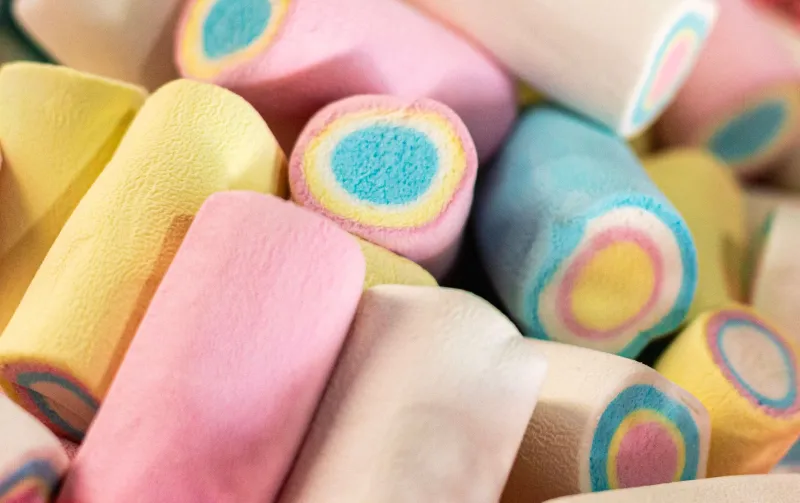
Level 5 — The Full Squish The holy grail. A Level 5 dessert is so perfectly yielding, so impossibly soft, so deeply satisfying to press, poke, or bite that it borders on a spiritual experience. Think ultra-whipped Japanese cheesecake, a warm lava cake that collapses at the gentlest fork pressure, or a marshmallow so fresh it practically exhales when you squeeze it. Rating: 5 out of 5 squishes. Frame it. Cherish it. Post it.
How to Run the Squish Test at Home
You don't need a lab coat or a fancy texture analyzer (though if you have one, we're jealous and also impressed). Here's how to run a proper squish evaluation in your own kitchen.
Step 1: The Visual Press Before you even touch it, look at the dessert. Does it look like it has give? Does the surface look bouncy or rigid? A slight dome, a glossy sheen, or a jiggly wobble are all promising squish indicators.
Step 2: The Gentle Poke Using one clean fingertip, apply light pressure to the surface of the dessert. You're not trying to destroy it — you're introducing yourself. Notice how quickly it resists. Does it spring back immediately? Does it hold an indent? Does it collapse entirely? Each response tells you something.
Step 3: The Fork (or Spoon) Test Apply your utensil with moderate pressure. A Level 3 and above should yield smoothly without crumbling or shattering. Resistance that requires real effort means you're probably looking at a Level 1 or 2. A dessert that practically parts for you like the Red Sea? Level 4 or 5 territory.
Step 4: The Bite Test Finally — the moment you've been waiting for. Take a bite and pay attention to the first half second. That initial give (or lack thereof) is the truest measure of squish. Does it melt? Does it bounce? Does it snap? Does it make you close your eyes involuntarily? Note all of this. It matters.
Step 5: Score It Using the scale above, assign your dessert a squish rating. Write it down. Compare it to other desserts. Start ranking your favorites. Argue about it with your family at dinner. This is what weekends are for.
Your Downloadable Squish Rating Chart
Want to make it official? Download the Squishy Cream Squish Rating Chart (link below this article!) and use it to track your dessert scores over time. It includes space for dessert name, squish level, notes on texture, and a little doodle box because we believe data should be cute. Great for baking nights, ice cream socials, or any time you want to settle a dessert debate with hard evidence.
Tips for Home Bakers: Engineering Your Own Perfect Squish
If you're the one doing the baking, texture isn't just something that happens to you — it's something you control. Here are a few pro-ish tips for hitting those higher squish levels.
Don't overbake. This is the number one squish killer. Pull cookies and cakes a minute or two earlier than you think. They'll continue cooking on the pan and you'll land in that gorgeous soft-center zone instead of Brick City.
Fat is your friend. Butter, cream cheese, sour cream — these ingredients add moisture and tenderness that push desserts toward the upper end of the scale. Don't skimp.
Rest your dough. Letting cookie dough or bread dough rest in the fridge allows gluten to relax, which translates to a softer, more yielding final product. Patience = squish.
Add a surprise element. A marshmallow folded into brownie batter, a cream cheese swirl in muffins, or a soft caramel center in a chocolate cookie can take a Level 2 dessert and launch it straight to Level 4 or 5.
Temperature is everything. Many desserts hit peak squish at specific temperatures. Warm brownies, room-temperature cheesecake, and slightly softened ice cream all perform better on the scale than their chilled or overheated counterparts. Know your dessert's sweet spot.
Go Forth and Squish
The Squishy Cream Squish Scale isn't just a gimmick — it's a philosophy. It's a reminder that eating dessert is a full-body sensory event, not just a flavor delivery system. The best bites are the ones you feel as much as taste.
So next time you're standing over a fresh pan of brownies or eyeing a tower of soft-serve, don't just dive in. Pause. Poke it. Press it. Rate it. Then eat it — enthusiastically, joyfully, and without a single ounce of regret.
Life really is sweeter with a little squish.