Forget Flavor: America's Dessert Obsession Is All About the Feel Now
Close your eyes and think about the last dessert that really got you. Not just tasted good — but genuinely made you stop mid-bite and think, wow, what is happening in my mouth right now? Chances are, it wasn't just the flavor doing the heavy lifting. It was the way that thing felt.
Welcome to 2024, where texture has officially elbowed its way to the front of the dessert line, shoved flavor aside, and said, "I'll take it from here."
The Great Flavor Takeover... That Wasn't
For decades, dessert innovation meant chasing the next big flavor. Salted caramel. Lavender honey. Black sesame. Tajín-dusted mango sorbet. Chefs and food brands raced to out-weird and out-yum each other on the taste front, and honestly? We loved it. But somewhere between the matcha craze and the millionth "elevated" chocolate lava cake, something shifted.
Consumers — especially younger ones — started craving something more physical. Not metaphorically physical. Literally. They wanted to interact with their desserts. Poke them. Pull them. Hear them crunch. Watch them jiggle. And the food world, ever responsive to what's blowing up on TikTok at 11 p.m., took notice fast.
Food scientists have a term for what's driving this: multi-sensory eating. The idea is that enjoyment of food isn't just about what your taste buds register — it's about the full-body experience of consuming something. Sound, sight, touch, and yes, the way a dessert physically moves through your mouth all play roles in how satisfying (or deeply, deeply memorable) a treat feels.
"Flavor is still important, obviously," says one pastry chef at a buzzy Chicago dessert bar who's been experimenting with multi-layered texture combinations for the past two years. "But when a customer comes back and tells their friends about a dessert, they almost always describe how it felt first. 'It was so crispy on the outside and then just completely melted.' That's the thing that sticks."
The Viral Texture Hall of Fame
Need proof? Just scroll. The desserts dominating social media in 2024 aren't necessarily the most complex flavor bombs — they're the ones doing something visually and physically unexpected.
Crème brûlée everything. The crack of a caramelized sugar top has become one of the most satisfying sounds on food content platforms. Crème brûlée donuts, crème brûlée cookies, crème brûlée ice cream bars — the flavor is secondary to that deeply satisfying tap-tap-crack moment.
Mochi and mochi-adjacent treats. The chewy, stretchy, slightly resistant bite of mochi has introduced an entirely new textural vocabulary to American dessert culture. It's not just an ice cream wrapper anymore — it's a texture goal. Mochi waffles, mochi brownies, mochi cake layers. People are chasing that specific chew like it's a competitive sport.
Jiggly, wobbly, don't-touch-it-yet desserts. Japanese soufflé cheesecakes and Taiwanese castella cakes have racked up billions of views largely because of how they move. The flavor profile is relatively mild — lightly sweet, gently eggy — but the wobble? Unhinged. Irresistible. Absolutely must-watch.
The crispy-creamy hybrid. Probably the most dominant texture trend of the past two years, this is the pairing of something shatteringly crunchy with something impossibly smooth or soft. Think fried ice cream, churro ice cream sandwiches, or the now-iconic Dubai chocolate bar with its crispy kataifi filling encased in silky chocolate. The contrast is the whole point.
What the Science Says (It's Not Just Hype)
Food scientists have been onto this for a while. Research in the field of food texture psychology consistently shows that textural contrast — particularly the combination of crispy and creamy — triggers stronger pleasure responses in the brain than single-texture foods. It's essentially a neurological party trick: the unexpected shift from one sensation to another keeps your brain engaged and signals novelty, which is a big driver of enjoyment and, crucially, the desire to take another bite.
There's also the auditory component. Studies have shown that the sounds food makes while being eaten influence perceived flavor and freshness. That's right — a louder crunch can actually make something taste better. Your brain is basically getting fooled into having more fun, and honestly, we're not mad about it.
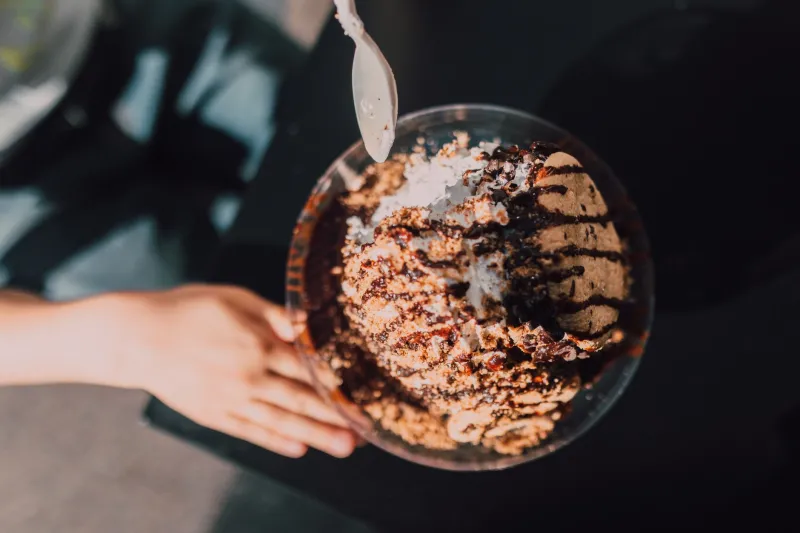
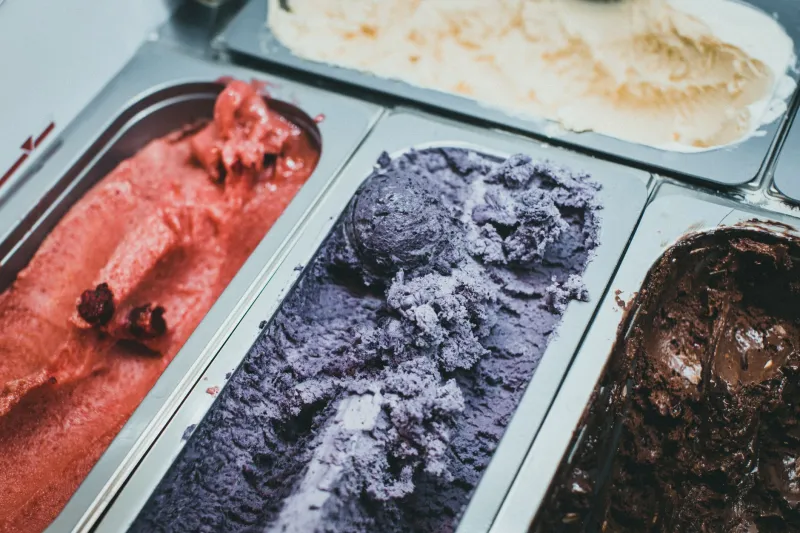
For ice cream specifically, texture has always mattered — but the conversation has gotten a lot more sophisticated. It's no longer just about whether your soft-serve is fluffy or your hard scoop is dense. Now shops are layering in textures through mix-ins, coatings, bases, and toppings in ways that are almost architectural. A single cup might hit you with creamy, crunchy, chewy, and airy all in one spoonful. That's not an accident. That's engineering.
The Dessert Shop Response
Independent dessert shops and small-batch ice cream brands have been the fastest to adapt to this shift, and the results are genuinely exciting. Across the country, menus are being redesigned not just around flavor profiles but around textural journeys — a phrase that would have sounded ridiculous five years ago and now sounds completely normal at a dessert industry conference.
In Los Angeles, shops are pairing liquid nitrogen-frozen ice cream pearls (shatteringly crisp outside, creamy inside) with warm, pillowy mochi bases. In New York, pastry chefs are building sundaes with multiple distinct textural layers — crunchy feuilletine, silky ganache, airy whipped cream, and chewy caramel ribbons — that are designed to hit differently depending on how deep your spoon goes. In Austin, a dessert bar has built its entire brand around the concept of "texture flights," where customers sample the same base flavor in four different textural preparations.
It's a full vibe shift, and it's not slowing down.
So Is Flavor Just... Done?
Not a chance. Flavor isn't going anywhere — it's just been forced to share the spotlight, which, honestly, was overdue. The most successful desserts right now are the ones where flavor and texture are working together as a team rather than flavor carrying all the weight while texture just shows up and tries not to embarrass itself.
Think of it this way: a perfectly flavored dessert with no textural interest is like a great song with no rhythm. Technically fine. Not something you're putting on repeat.
The real magic — the stuff that makes people stop mid-conversation, look down at their bowl, and say "okay but what is this" — happens when the flavor and the texture are both doing something interesting at the same time.
And in 2024, dessert lovers across America are demanding exactly that. More squish. More crunch. More jiggle. More of that impossible, delightful, slightly confusing sensation of biting into something and not being entirely sure how to describe it — only knowing that you absolutely need another one.
Flavor had a great run as the star of the show. But texture just walked in wearing a crème brûlée crown, and the crowd is losing it.