Poke It, Press It, Eat It: The Wild Science Behind Engineering the Perfect Dessert Squish
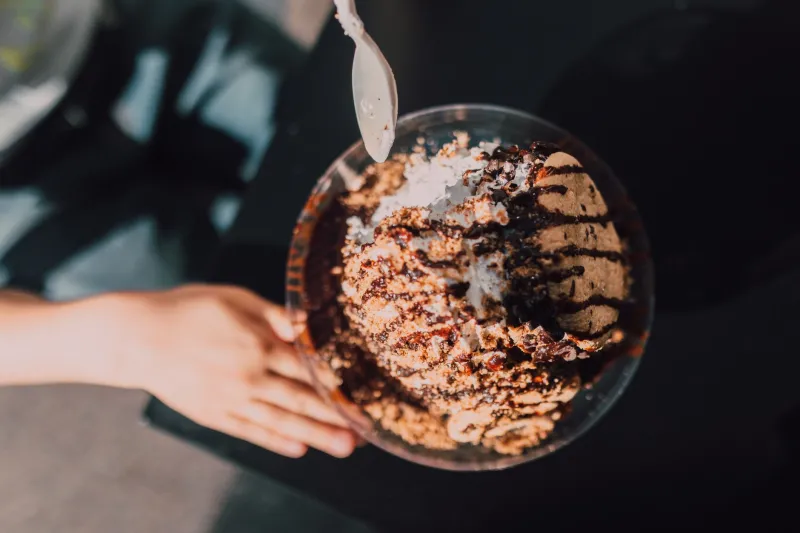
If you've ever bitten into a brownie and felt something close to spiritual — that split-second where the crust gives way to a dense, yielding, almost gravity-defying interior — you weren't imagining things. That experience was engineered. Deliberately. By people in lab coats who spend their days poking desserts for a living.
Welcome to the quietly booming world of dessert texture science, where food researchers and pastry chefs are teaming up to decode the biomechanics of the perfect squish. And yes, "squish" is basically a technical term now. Sort of.
What Even Is a "Texture Analyzer" and Why Does It Sound Like a Villain's Machine?
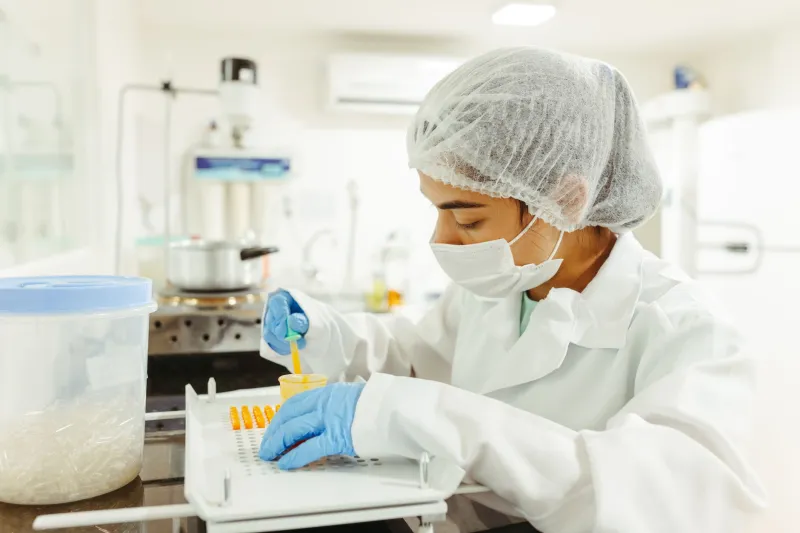
At the heart of this science is a piece of equipment called a texture analyzer — essentially a very precise, very expensive robot arm that presses down on food at controlled speeds and measures exactly how much force it takes to compress, puncture, or shear through it. The resulting graphs look like something from a physics textbook, but what they're actually mapping is the experience of taking a bite.
Dr. Melissa Hartwell, a food scientist at a Midwest research university who consults with commercial bakeries, describes it this way: "What we're capturing is the mechanical equivalent of what your mouth already knows instinctively. When you bite into something and go, 'Oh, that's perfect — that's your sensory system detecting a very specific force-deformation curve. We just put numbers to it."
Those numbers, it turns out, are enormously valuable. Because once you know exactly what makes a dessert feel perfect, you can reproduce it. Scale it. Sell it by the millions.
The Brownie Problem (And Why It Keeps Researchers Up at Night)
If there's a holy grail in dessert texture science, it might just be the humble brownie. Few foods inspire as much passionate debate about texture — fudgy versus cakey, dense versus airy, crackly-topped versus matte — and fewer still are as technically tricky to nail consistently.
"A brownie is a nightmare in the best possible way," says James Okafor, a pastry chef and product developer who has worked with several major US dessert brands. "You've got fat content, sugar crystallization, gluten development, egg protein networks, moisture retention — all of these variables are competing with each other. Change one thing and the whole texture shifts."
Texture analyzers help Okafor's team run rapid iterations. Instead of waiting for a trained taster panel to weigh in on fifty brownie samples — which is both time-consuming and, frankly, a lot to ask of anyone's stomach — they can get objective compression data within minutes. The human tasters still come in later, but the machine narrows the field dramatically.
The key metric they chase? Something researchers call "springback ratio" — basically, how much of its original shape a brownie recovers after being compressed. Too much springback and it feels cakey and dry. Too little and it's dense to the point of gummy. The sweet spot is a ratio that signals rich, moist, and yielding without collapsing entirely. That ratio, Okafor says, "is the squish."
Mousse, Gelatin, and the Art of the Wobble
It's not just baked goods getting the laboratory treatment. Chilled and frozen desserts are equally subject to texture analysis, and in some ways they're even more complex — because temperature changes everything.
Mousse, for example, is essentially a foam stabilized by fat and air. Its texture is almost entirely about bubble size distribution and the strength of the protein network holding those bubbles together. Get it right and you have something ethereally light that melts on your tongue. Get it wrong and you have either whipped air that collapses immediately or something disturbingly close to rubber.
"We actually measure mousse at multiple temperatures," says Dr. Hartwell. "Because a mousse that's perfect at 38 degrees Fahrenheit might feel completely different at 50 degrees, which is what it'll be after sitting on someone's plate for five minutes. You have to engineer for the whole eating experience, not just the first bite."
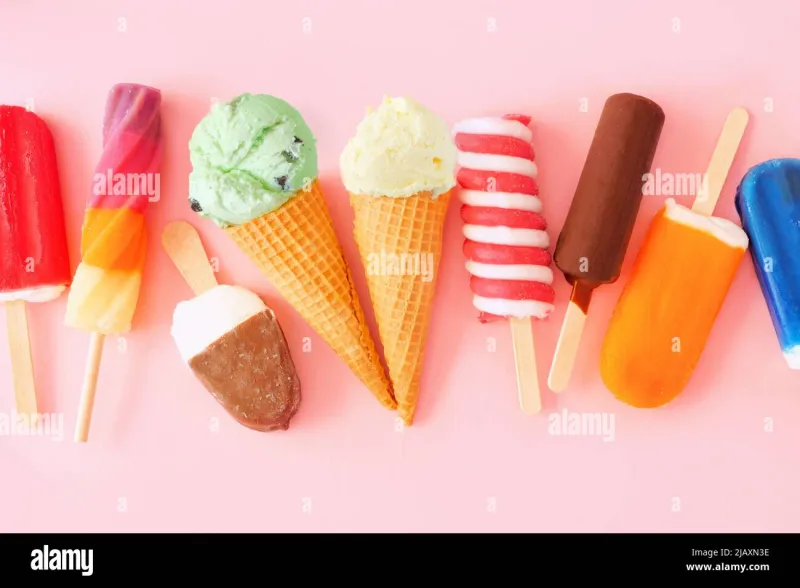
Gelatin-based desserts like panna cotta and certain ice cream novelties bring their own challenges. The bloom strength of the gelatin, the ratio of cream to milk, even the speed of cooling during production — all of these affect the final jiggle. Yes, jiggle is also a technical parameter. There are entire research papers about it.
Why Ice Cream Shops Are Starting to Care About This Stuff Too
For decades, texture science was mostly the domain of large food manufacturers trying to optimize products at massive scale. But something has shifted. Independent ice cream shops, artisan bakeries, and dessert-forward restaurants across the US are increasingly tapping into the same principles — even if they don't have access to a $30,000 texture analyzer.
The competitive pressure is real. In a social media landscape where a dessert has about three seconds to stop a scroll, texture has become a visual language. The stretch of a mochi, the collapse of a cream puff, the slow ooze of a molten center — these are the moments that go viral. And behind every one of those moments is a specific set of textural properties that someone worked very hard to achieve.
"Our customers can't always tell you why something feels amazing," Okafor says. "But they absolutely know when it doesn't. And they will never come back."
Smaller operations are getting creative about texture testing without lab equipment. Some pastry chefs use their fingers with almost clinical precision — pressing dough, tapping crusts, dragging a spatula through ganache — building a tactile vocabulary over years of practice that roughly mirrors what the machines measure. Others are collaborating directly with university food science departments, which are increasingly eager to partner with industry.
The Future Is Squishier Than You Think
So where does all this science lead? According to researchers, the next frontier is personalized texture — desserts engineered for specific populations, whether that's older adults who need softer food textures for health reasons, or kids who gravitate toward particular mouthfeel profiles, or athletes looking for functional treats with specific structural properties.
There's also growing interest in using texture science to reduce sugar and fat without sacrificing the sensory experience. It turns out that a lot of what we perceive as "richness" or "indulgence" is actually a textural cue rather than a flavor one. Engineer the right squish and your brain might not notice that the calorie count dropped.
But perhaps most importantly for the rest of us just trying to enjoy dessert, this science is quietly making our treats more reliably, consistently, gloriously perfect. Every time that brownie yields at exactly the right moment, every time the mousse collapses onto your tongue like a tiny edible cloud — there's a decent chance someone in a lab somewhere already predicted it would feel exactly like that.
And honestly? That makes it taste even better.