Softer by Design: The Secret Industry Plot to Make Your Ice Cream Melt Faster in Your Heart
Picture this: It's 2012. You crack open a pint of your favorite ice cream, and the spoon bounces back like it hit a hockey puck. You dig in, chip away, maybe bend the spoon a little, and eventually — eventually — you get your bite. It was a whole thing. A commitment. A workout, even.
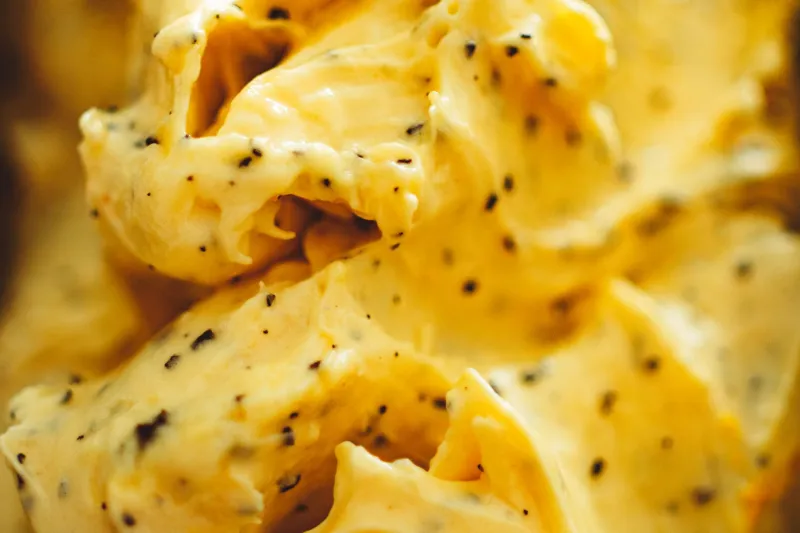
Now fast-forward to today. You peel back the lid, and your spoon practically glides in like it's greeting an old friend. The texture is lush, almost cloud-like, yielding in a way that feels less like frozen dairy and more like a very cold hug.
You probably didn't notice the change. That was entirely intentional.
The Quiet Revolution Happening in Your Freezer
Food scientists and dessert industry insiders have been watching a slow, deliberate transformation unfold across the frozen treats category for the better part of a decade. It's not accidental, and it's not your imagination. Major ice cream manufacturers — from household name brands to artisan-adjacent upstarts — have been systematically reformulating their products to achieve softer, creamier, more yielding textures at standard freezer temperatures.
"The industry term is 'scoopability,'" explains Dr. Rachel Nguyen, a food texture researcher who has consulted for several major CPG (consumer packaged goods) companies. "It sounds mundane, but the engineering behind it is genuinely sophisticated. You're essentially trying to control the size of ice crystals, the ratio of air incorporation, and the behavior of stabilizing agents — all so that a product feels softer to the consumer without technically being warmer."
In other words, the ice cream in your freezer hasn't gotten lazier. It's gotten smarter.
The Science of the Squish
So how exactly do you make something frozen feel softer? It turns out the answer involves a cast of chemical characters that would make your high school chemistry teacher genuinely excited.
Modern ice cream formulations increasingly rely on a combination of hydrocolloids — ingredients like locust bean gum, guar gum, and carrageenan — that act as texture architects. These compounds interfere with ice crystal growth, keeping crystals smaller and more uniform, which translates directly to a smoother, creamier mouthfeel. Meanwhile, adjustments to the overrun (the amount of air whipped into the mixture during freezing) can dramatically affect how a product yields under pressure.
"Think of it like adjusting the thread count in a sheet," says Marcus Webb, a food chemist based in Chicago who specializes in frozen dessert development. "More air, finer crystal structure, the right stabilizer blend — and suddenly you've got something that feels almost pillowy at 0°F. That's not magic. That's about three years of R&D and a very patient team."
Brands have also gotten more aggressive about something called the "glass transition temperature" — the point at which a frozen product shifts from rock-hard to pliable. By tweaking sugar profiles (including the increasing use of invert sugars and trehalose), manufacturers can engineer products that hit that pliable sweet spot right out of a standard home freezer, no counter-thawing required.
But Why, Though? Follow the Squishy Money
Here's where things get interesting, because the motivation behind all this texture engineering isn't purely scientific altruism. There's a very clear business case for softness.
First, there's the social media factor. A scoop that yields beautifully, drapes photogenically over a cone, or stretches in that satisfying way is content. It's shareable. It's a TikTok waiting to happen. Brands that figured this out early — looking at you, stretchy Turkish-style dondurma and mochi ice cream — saw their products go viral in ways that a rock-hard traditional scoop simply never could.
"Texture is the new flavor," says Jamie Okafor, a marketing strategist who has worked with several regional ice cream chains. "Flavor is expected. Everyone has great flavors now. But if your product has a moment — a satisfying squish, a dramatic pull, a melt that's just chef's kiss — that's what gets people talking. Softness is a marketing asset."
There's also a more pragmatic economic angle. Softer formulations often incorporate slightly higher overrun, meaning more air per pint. More air means less actual product per container — a fact that has not gone unnoticed by the very online consumer watchdog community. But from a manufacturer's perspective, it also means lower ingredient costs and, arguably, a product that behaves more consistently across the wildly varied temperature conditions of American supply chains.
Are Consumers Actually Noticing?
This is the delicious irony at the center of the whole squish conspiracy: most people haven't consciously clocked the change, but their behavior has shifted dramatically in response to it.
Survey data from the International Dairy Foods Association shows a consistent uptick in consumer preference for "smooth" and "creamy" texture descriptors over the past eight years, at the expense of descriptors like "dense" and "firm." People are choosing softer products. They're just not necessarily connecting that choice to any deliberate reformulation.
"It's a bit like how movie theater seats got more comfortable over thirty years," offers Dr. Nguyen. "Nobody sat down in 2023 and thought, 'Wow, this is softer than 1991.' They just... enjoyed the movie more. The change happened gradually enough that it became the new normal."
That said, a vocal contingent of old-school ice cream enthusiasts — particularly in communities centered around traditional Italian gelato and Philadelphia-style ice cream (which contains no eggs and freezes harder by nature) — have pushed back against what some call the "softening" of American frozen desserts. For them, resistance to the spoon is a feature, not a bug. The dig, the effort, the moment when the scoop finally gives — that's part of the ritual.
The Squishy Future Is Already Here
Whether you're a softness evangelist or a firm-texture traditionalist, the industry signals are pretty clear about where things are headed. New product launches in the frozen dessert space continue to skew toward soft-serve-adjacent textures, whipped formats, and products engineered for immediate, effortless scoopability.
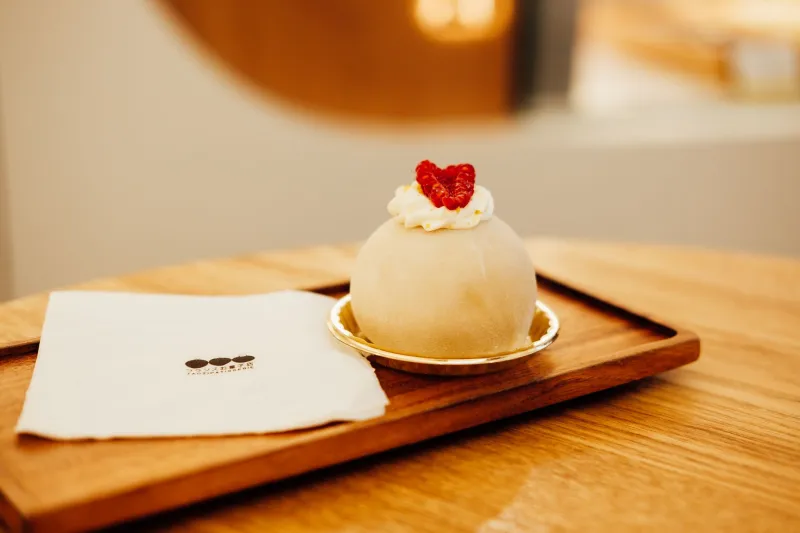
Mochi ice cream — which delivers that iconic chewy-soft exterior with a creamy center — has exploded from a niche Asian grocery find to a mainstream freezer aisle staple, stocked at Trader Joe's, Costco, and Walmart nationwide. Whipped ice cream bars, soft-frozen novelties, and "spoonable" frozen yogurt formats are all gaining shelf space at the expense of more traditional, denser products.
And the R&D pipelines at major manufacturers suggest the texture arms race is far from over. Plant-based frozen desserts, in particular, represent a new frontier for squish engineering — because replicating the mouthfeel of dairy without actual dairy fat is, according to Webb, "one of the hardest texture problems in food science right now."
So the next time you crack open a pint and your spoon slides in like a dream, take a moment to appreciate the years of quiet, meticulous, delightfully nerdy science that made that moment possible. Somebody, somewhere in a food lab, cared very deeply about your squish. And honestly? That's kind of beautiful.
Life's sweeter with a little squish — and apparently, a lot of hydrocolloids.