Fluff Fight: The Great Marshmallow Showdown Shaking Up the Dessert Scene
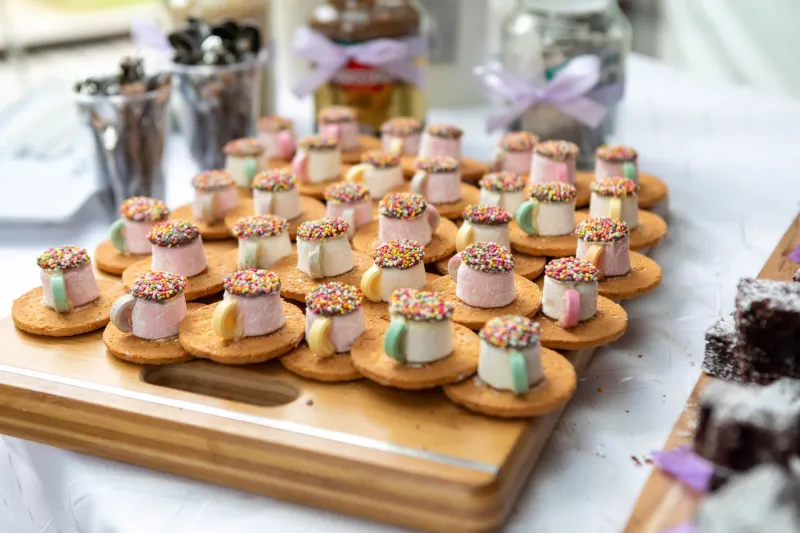
Somewhere between the grocery store baking aisle and a Brooklyn artisan candy shop, a war is being waged. It's sticky, it's pillowy, and it smells faintly of vanilla. We're talking, of course, about marshmallows — that deceptively simple confection that has somehow managed to divide the entire dessert-loving population of America into two very passionate camps.
On one side: the purists. These are the folks who will spend an entire Saturday afternoon whipping up homemade marshmallows from scratch, dusting them in powdered sugar, and refusing to acknowledge that the bag of Jet-Puffed in your pantry even exists. On the other side: the pragmatists, the nostalgia-chasers, the people who grew up squishing a handful of mini marshmallows into their hot cocoa and see absolutely nothing wrong with that. Both sides have opinions. Both sides are loud about them. And honestly? Both sides have a point.
A Brief, Surprisingly Dramatic History of the Marshmallow
Here's a fun fact to drop at your next cookout: marshmallows have been around for thousands of years, and they started out as medicine. Ancient Egyptians extracted sap from the mallow plant (Althaea officinalis) — which grew wild in marshes, hence the name — and mixed it with honey to soothe sore throats. Nobody was roasting those over a campfire.
Fast forward to 19th-century France, where confectioners figured out that whipping mallow root sap with egg whites and sugar created something far more interesting than cough syrup. The French sold these as individual handmade candies, and they were considered quite the luxury treat. Then, in the 1900s, American manufacturers swapped out the mallow root for gelatin, industrialized the whole process, and suddenly marshmallows were everywhere — bagged, uniform, and magnificently cheap.
That gelatin swap is, arguably, where the great schism began.
What Makes an Artisanal Marshmallow Worth the Fuss?
If you've ever bitten into a marshmallow made by someone who actually cares — like, deeply, personally cares — you know the difference is real. Handcrafted marshmallows tend to be airier, with a more complex flavor that goes beyond plain sweetness. Confectioners can infuse them with lavender, bourbon, espresso, toasted coconut, or raspberry. The texture has a delicate give that's less rubbery and more cloud-like.
"There's a moment when you get the whip just right," says one small-batch confectioner based out of Portland, Oregon, who makes marshmallows exclusively for local dessert shops and farmers markets. "The mixture goes from glossy to this incredible billowy mass, and you know you've done something right. You can't get that from a factory."
Artisan marshmallows have become a staple at upscale ice cream shops across the country, where they're torched tableside, folded into sundaes, or served alongside house-made hot fudge. In cities like Nashville, Austin, and Chicago, dessert menus now routinely specify housemade marshmallow the same way a steakhouse specifies dry-aged — as a signal of quality and intention.
In Defense of the Bag (Yes, Really)
Before you side-eye your grocery store marshmallows, let's pump the brakes. There is something genuinely irreplaceable about the mass-produced version, and millions of Americans will defend it with the fervor of someone protecting a family recipe.
The Jet-Puffed marshmallow — or its equally iconic sibling, Kraft's marshmallow creme — is woven into the fabric of American food culture in a way that no artisan product can replicate. It's the ingredient in your grandmother's sweet potato casserole. It's the thing that makes Rice Krispie Treats taste exactly like Rice Krispie Treats. It's what you toss into a mug of Swiss Miss at 11pm when the day has been a lot.
There's also the texture argument. Store-bought marshmallows have a specific chew — slightly firmer, with that satisfying resistance before they give way — that works perfectly in certain applications. Roasting a factory marshmallow over an open flame produces that iconic charred shell with a molten, lava-like interior in a way that's genuinely hard to replicate with the more delicate homemade variety. Ask any s'mores purist (and yes, s'mores purists absolutely exist), and they'll tell you: Graham cracker, Hershey bar, Jet-Puffed. That's the formula. Don't mess with it.
Regional Loyalties Run Deep
The marshmallow debate also has a surprisingly strong geographic dimension. In the South, marshmallow fluff — that spreadable, jar-dwelling cousin of the solid marshmallow — is practically a pantry staple, appearing in everything from fudge to fruit salad. New England has a long-standing love affair with Fluffernutter sandwiches (peanut butter and marshmallow fluff on white bread, for the uninitiated), and Massachusetts has even tried, multiple times, to make Fluffernutter the official state sandwich.
Meanwhile, in the Pacific Northwest and major coastal cities, the artisan marshmallow movement has taken firm hold. Specialty confectionery shops in Seattle, San Francisco, and New York have built entire brand identities around elevated marshmallow products — think matcha marshmallows dipped in dark chocolate, or sea salt caramel versions dusted with smoked paprika.
Midwestern state fairs? Firmly in the store-bought camp, where marshmallows appear on skewers, in chocolate-dipped form, and occasionally deep-fried in ways that are objectively chaotic and completely wonderful.
So Who Actually Wins?
Here's where Squishy Cream is going to do something radical: refuse to declare a definitive winner. (We know. We're brave.)
The truth is, the best marshmallow is the one that's right for the moment. Torching a gorgeous, vanilla-bean-speckled handmade marshmallow over an ice cream sundae? Absolutely the move. Making s'mores around a backyard fire pit with whatever was on sale at Target? Also completely correct. Eating a handful of mini marshmallows directly from the bag while standing in front of the open refrigerator at midnight? No comment, but we understand.
What the marshmallow debate really reveals is how deeply personal dessert is. People aren't just arguing about sugar and gelatin — they're arguing about memory, about comfort, about what "homemade" means and whether it matters. And that's actually kind of beautiful, in a very sticky, pillowy way.
The artisan marshmallow movement has done something genuinely valuable: it reminded us that this ingredient, which we'd largely taken for granted, has serious culinary potential. It pushed ice cream shops and dessert menus to think more creatively about texture and flavor. It made the marshmallow interesting again.
But the bag in the pantry? It's not going anywhere. And it shouldn't have to.
The Squish That Unites Us
At the end of the day — or the end of the skewer, as it were — marshmallows represent something that transcends the artisan-versus-mass-produced debate. They're one of the few foods that is almost universally associated with joy. Kids love them. Adults secretly love them. They show up at campfires and holiday dinners and ice cream bars and hot chocolate stations and wedding dessert tables.
They squish. They stretch. They toast. They melt. They are, in their own humble, pillowy way, a little piece of edible magic.
So go ahead and pick your side in the Marshmallow Wars. Just don't forget to enjoy the treat in the process. Life's too short for bad marshmallows — whatever that means to you.